


fine dining for insects

Despite the heat, (which granted is not nearly as severe as it is in places such as Phoenix and Dubai), there is plenty of sweat as we work our way through one of the warmest summers on record. It makes me wonder how nature's creatures other than humans are coping with the heat and relative lack of moisture in their environments. There is plenty of fine dining going on in our small gardens, with assorted greens and sugar on the menu. That must help!
As a near-native of New Mexico, I can count the number of times I have seen a katydid in the garden on one hand. More like two fingers. Granted, the members of the Tettigoniidae family (which includes bush crickets) are ideally suited to avoiding the eyes of humans and predators with their extraordinary appearance. It is rare to see anything that comes so close to looking like a leaf. In the photograph below, the veins of the katydid wings mimic the leaves in of the rose bush, even showing light colored spots that might appear on a plant leaf. Although these, like praying mantis, have a bit of what I would call the insect "creep" factor, they are fascinating. If you look at the legs, they even mimic the small spines on the rose bush stem in the lower left hand corner.
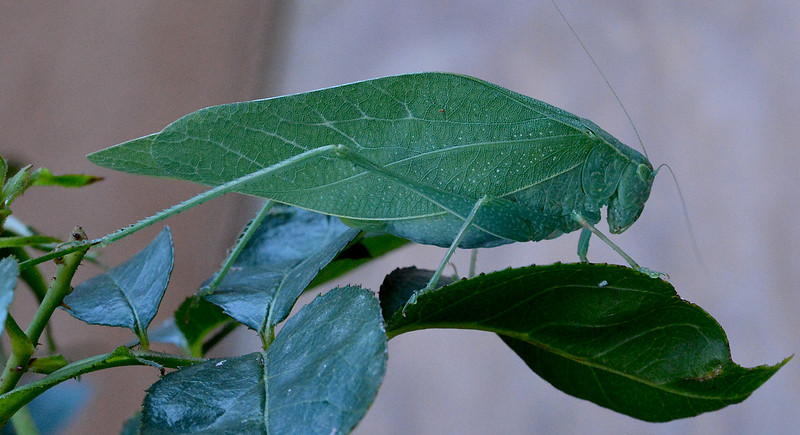 Insects - katydid 2 2026
Its front foot is holding onto the leaf while its head with very substantial mandibles is designed for taking a chunk out it and chewing it with great vigor. It gives me a clue to its success as a species.
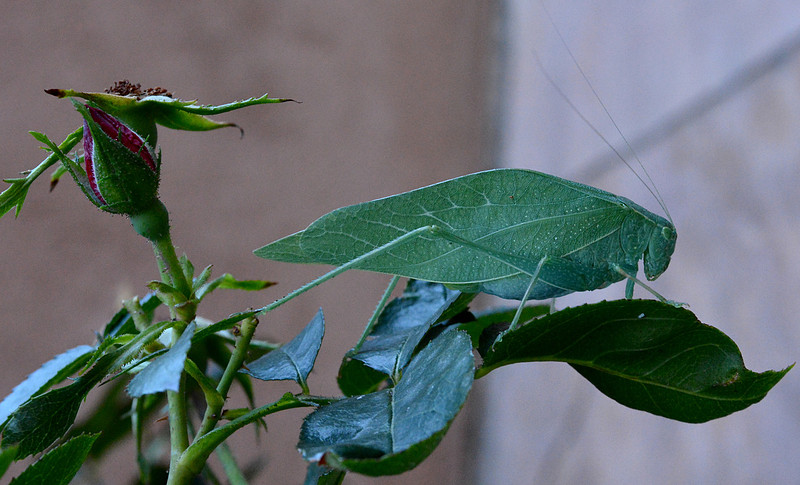 Insects - katydid 1 2026
On to another subject. Swallowtail butterflies are in their glory at this time of year. The many "butterfly bushes" (Buddleia davidii) that have been planted and seem to grow enthusiastically in our area, are in bloom, providing plenty of nectar for the butterflies.
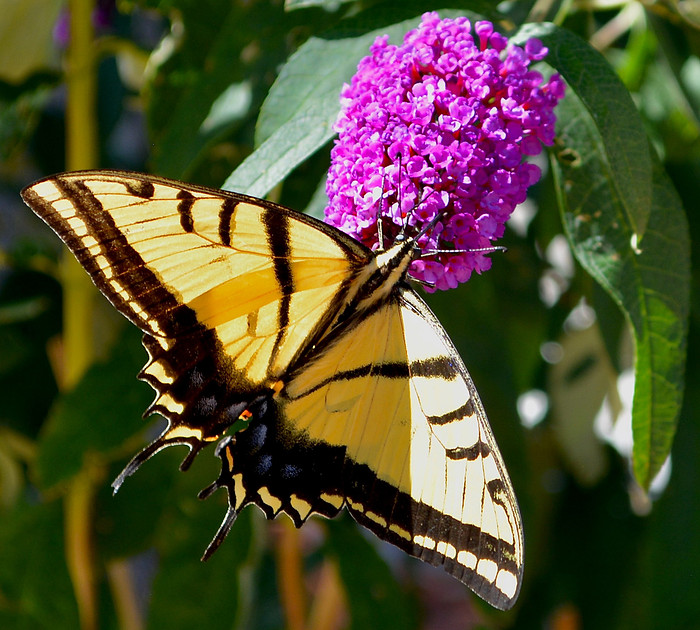 Butterflies - swallowtail on butterfly bush
Other purple plants also attract swallowtails, including culinary sage, which in the image below, is in full bloom. Swallowtails will hang around these plants for a very long time, fluttering from flower to flower.
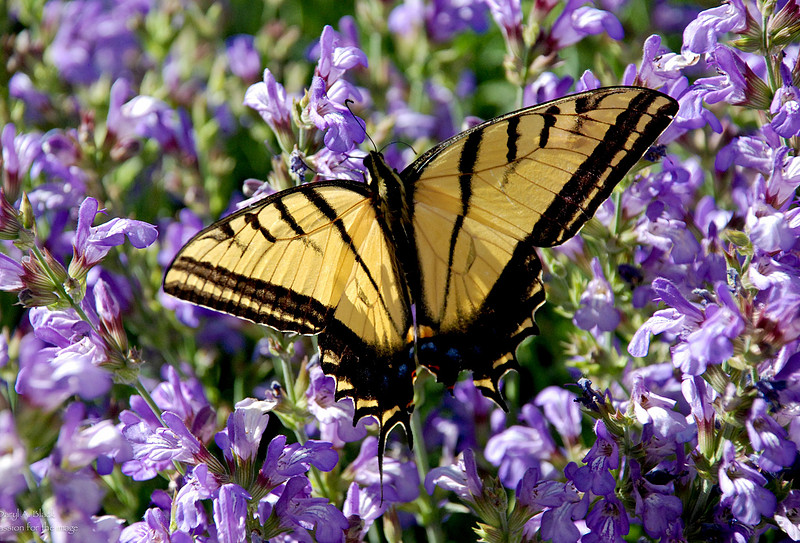 Butterflies - swallowtail on culinary sage
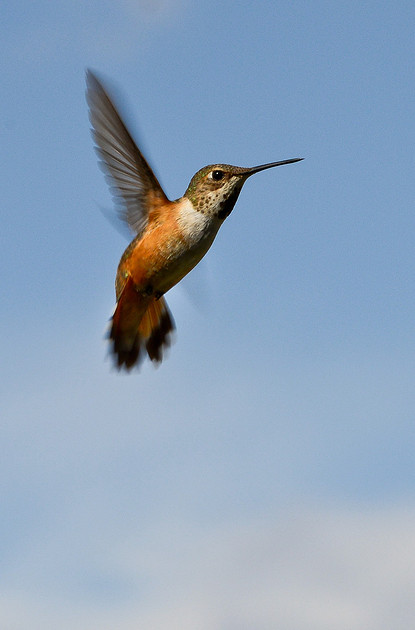
And of course, the rufous hummingbirds have joined the party as they make their return trip to Mexico where they will spend the winter.
Thanks to Marilyn G., Jean & Sam, Catherine, Lawrence, and Steve for commenting on last week's blog.
With luck, you will be able to choose a cool time to venture out, cameras in hand, and discover new things this week.
until next Monday,
DB
a passion for the image©