


cottage industry at work

Artist friend and fellow martial artist Victoria frequently asks us "how is work in the art departments going"? She knows that Fred and I work on weaving and photography an average of six hours every day, including weekends. Being self-employed in a small house, eventually, the entire house becomes part of the art, and that certainly is the case for my photography and Fred's weaving. The term "cottage industry" applies well to us. In the case of Fred's weaving, the wool goes from the vendor to the second story loom room, to the living room for winding into more accessible balls, and back to the loom room and organized. When Fred has finished a rug and removes it from the loom, he takes it to the bedroom where the warp ends are knotted and tied before it moves to the living room to have grazing detritus removed, before being photographed. Wherever Navajo-Churro sheep are grazing, there are tumbleweeds and assorted plants through which the sheep walk for fine dining. Despite the processes of carding, washing, and spinning at the mill after which the wool is dyed by any number of people, general organic bits remain in the wool. Thus, Fred kneels on the floor, pulling out particles before I photograph the work.
But, we'll return to the bedroom for this photographic sequence, as Fred finished the ends of Rug 432. The ends are not merely decoration. They are the warp or backbone of the rug that remains after the weft is woven into the warp. Without the warp, every single thread would have no structure, eventually falling into pieces. So each warp end needs to be knotted to provide security for the rug's structure. He began phasing in Damascus edges in early 2022, as an end treatment that would be not only practical but of visual appeal and unique to his work. In the first photograph here, he has already constructed the Damascus edge, which is one continuous knot across the entire width of the weaving. This is done on both ends of the rug.
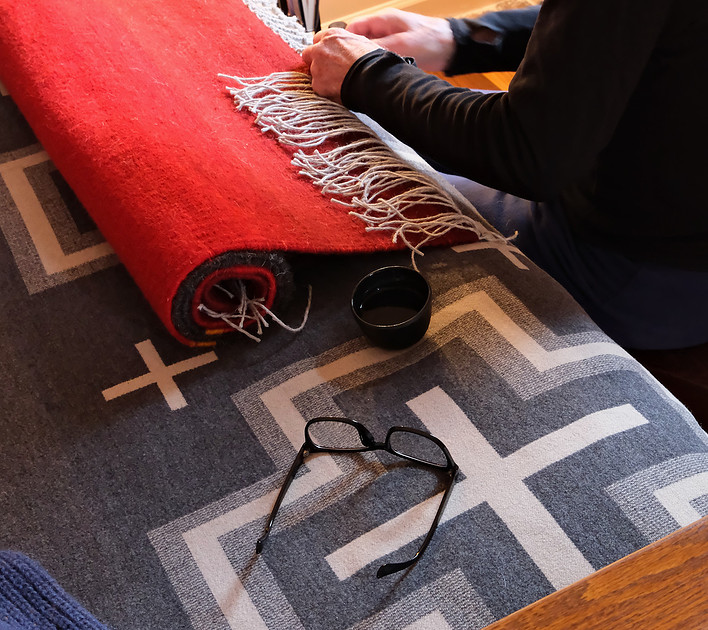 Rug 432 half Damascus edge and maritime cabling 1 2026
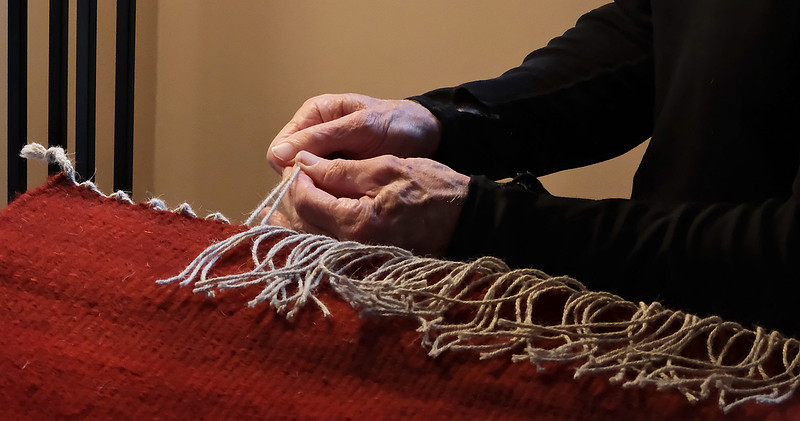 Rug 432 half Damascus edge and maritime cabling 9 2026
In the following series, he is reinforcing the Damascus edge by using maritime cabling and a simple knot at the end. "The Damascus edge tightens and holds the weft firmly. The cabling reinforces the Damascus edge. The final knot holds the cabling in place." Like any good mechanical or artistic process, each step provides a layer of strength and structure to the entire piece.
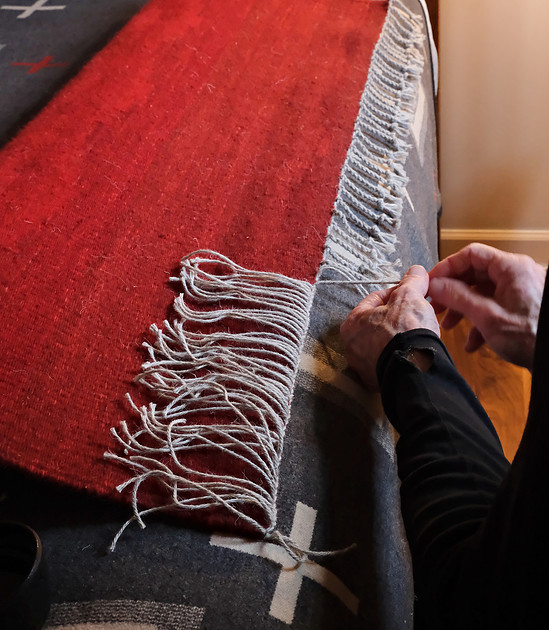 Rug 432 half Damascus edge and maritime cabling 2 2026
In the image below, he has taken two strands of 4-ply Navajo-Churro warp and spun them clockwise around each other.
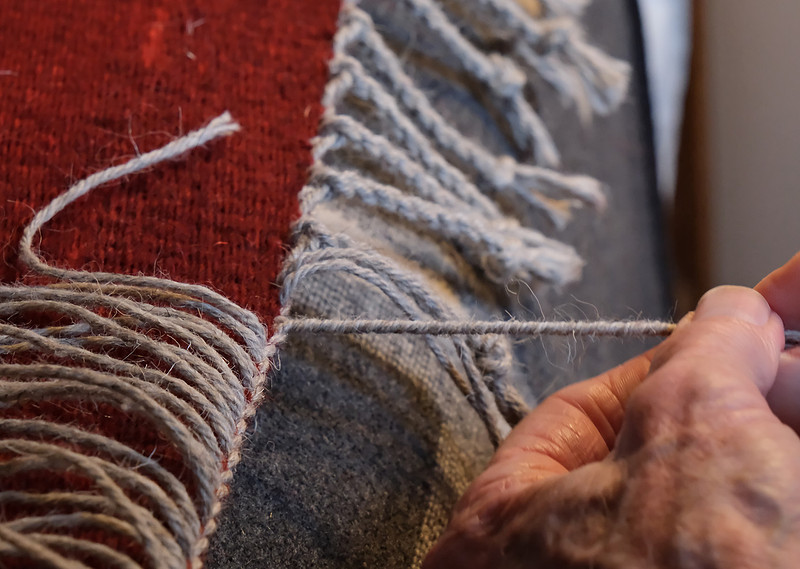 Rug 432 half Damascus edge and maritime cabling 4 2026
The next step is taking two more strands of warp and spinning them, clockwise, on top of each other, shown in the next two photographs below.
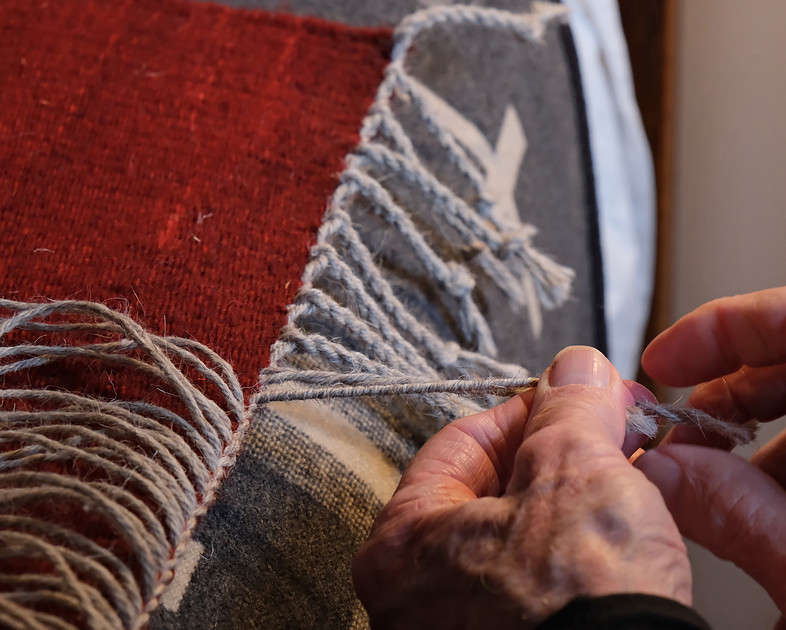 Rug 432 half Damascus edge and maritime cabling 5 2026
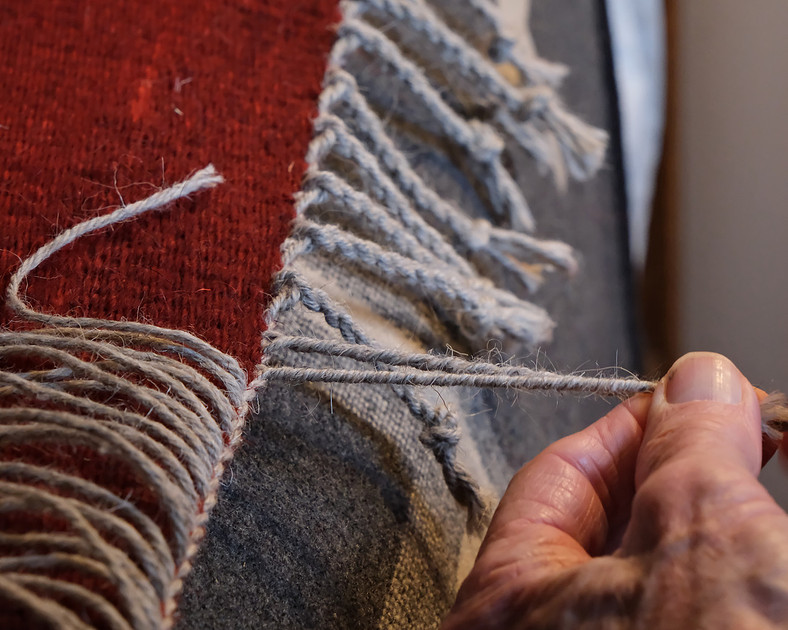 Rug 432 half Damascus edge and maritime cabling 6 2026
He follows the process with spinning the four strands of warp counter clockwise on top of each other to form the cable.
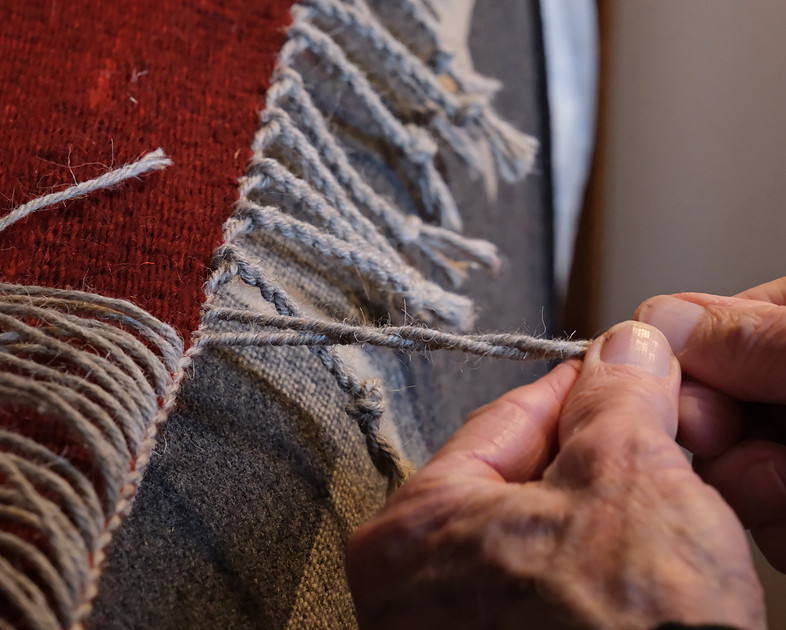 Rug 432 half Damascus edge and maritime cabling 7 2026
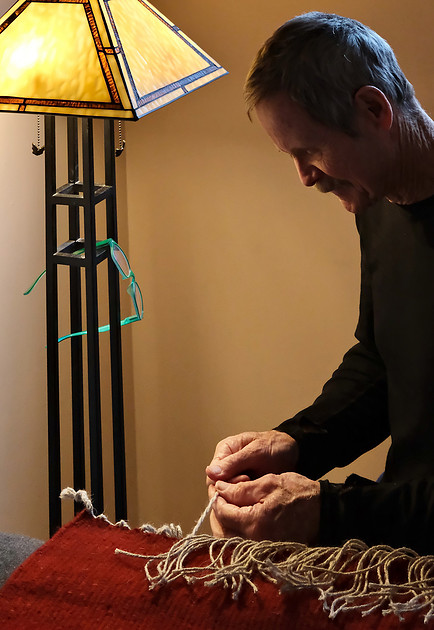 Rug 432 half Damascus edge and maritime cabling 3 2026
After the final cabling, a simple knot is made to make the cabling secure. It is the intersection of rhythm, repetition and mathematics that weaving shares with architecture and music. Fred recently completed Rug 431 for a musician, professor of music, and conductor who probably saw the connection.
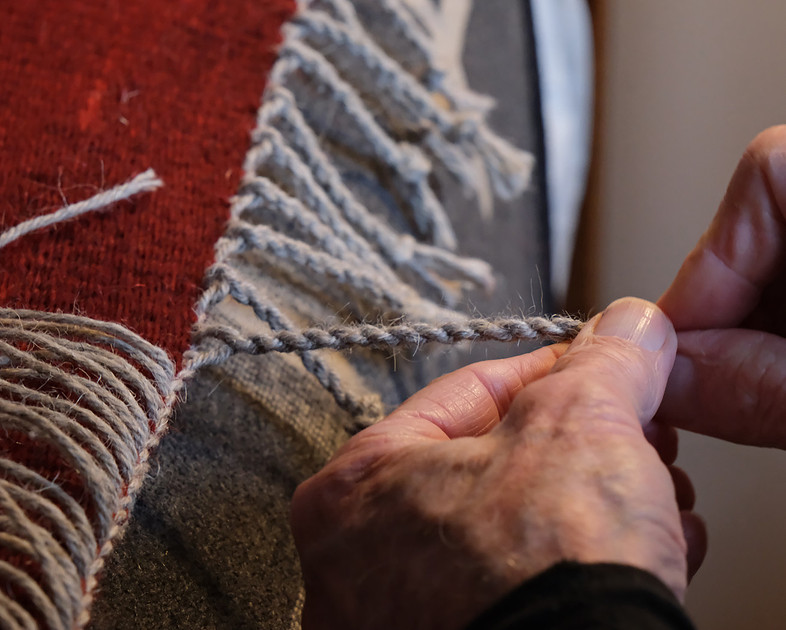 Rug 432 half Damascus edge and maritime cabling 8 2026
Rug 432, which, in total, contains 456 knots in the Damascus edges and cabling. Fred claims he has no fingerprints left when finishes a rug.
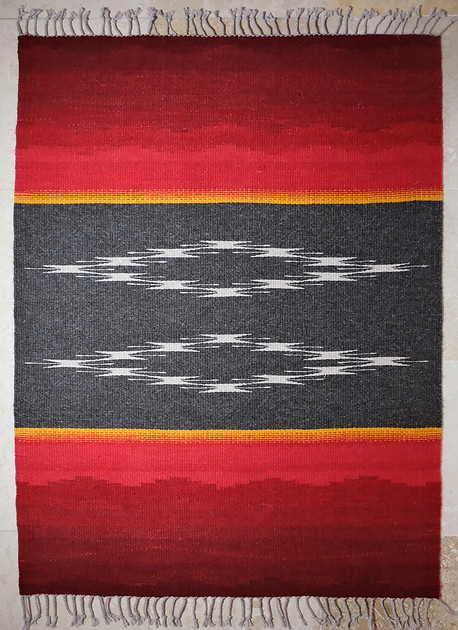 Rug 432
Thanks to Gustavo, Terry T., Catherine, Jean & Sam, Steve, Ingrid, and Victoria for writing about last week's blog.
I hope this week provides all of you abundant opportunities to produce art of many kinds wherever you are, as daffodils begin to emerge in the garden here.
until next Monday,
DB
a passion for the image©